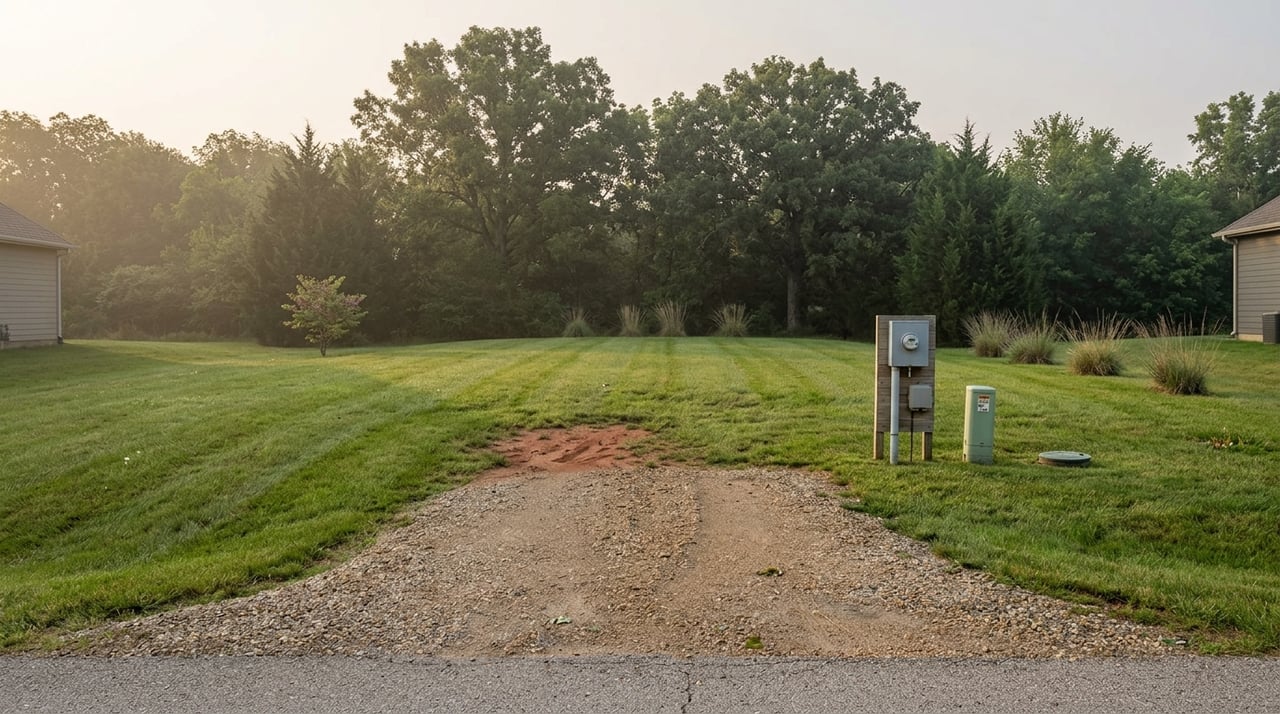
Thinking about buying land in Ozark so you can build later? It can be a smart move, but raw land comes with more questions than an existing home. You need to know whether the lot fits your plans, what utilities are available, and what city or county rules apply before you close. If you want to avoid expensive surprises, a little due diligence now can save you a lot of stress later. Let’s dive in.
Why land due diligence matters
Buying a homesite is different from buying a move-in-ready property. With vacant land, you are not just choosing a location. You are also choosing a zoning category, access setup, utility path, and construction process.
In Ozark, those details matter because lot standards, frontage rules, floodplain issues, and permit requirements can all affect whether your future home is feasible. The city’s Planning & Development Department oversees zoning, platting, building permits, and related development review, which makes it a key first stop when you are evaluating a parcel.
Start with jurisdiction and zoning
Before you fall in love with a piece of land, confirm whether it is inside Ozark city limits or in unincorporated Christian County. That one detail affects which rules, permits, and utility procedures may apply.
If the parcel is tied to Ozark, review the city’s zoning resources and planning guidance. The city also notes that its long-range planning includes the Urban Service Area outside city limits, so land near the edge of town may still be influenced by future planning decisions.
Lot size requirements vary by district
Not every residential parcel can support the same home footprint. Ozark’s code includes multiple residential districts with very different minimum lot sizes and widths.
For example, current standards include A-1 at 1 acre and 150 feet of width, R-1A at 20,000 square feet and 100 feet of width, R-1B at 15,000 square feet and 80 feet, R-1C at 10,000 square feet and 70 feet, R-1D at 7,000 square feet and 50 feet, and R-1P at 5,000 square feet and 50 feet under the city’s residential zoning code. Front-yard setbacks are generally 25 feet in single-family districts, while side and rear setbacks vary by district.
That means a lot that looks roomy at first glance may still be a poor fit if your planned house, garage, driveway, and outdoor space cannot work within the required setbacks.
Check access and frontage early
Access is one of the biggest issues to verify when buying land in Ozark for a future home build. A parcel is not automatically buildable just because it is vacant.
Ozark’s code generally does not allow private access easements for new residential development, except alleyways for rear-loading garages. The code also says each lot must meet minimum frontage on a public right-of-way, according to the city code provisions on residential development standards.
Street type can affect your plans
The city’s transportation framework also matters. Arterial streets are designed to move traffic efficiently, so entrances and exits are more controlled. Residential streets are intended to provide more direct access to adjoining property.
If a lot sits near a larger road, you will want to understand how that road functions before you move forward. That is especially important in areas covered by the city’s Onward Ozark corridor planning study, which addresses future land use, redevelopment, transportation, and corridor character along key routes.
Verify water, sewer, or septic options
Utilities can make or break a land purchase. A parcel may seem affordable at first, but the true cost can rise quickly if you need a main extension, annexation agreement, or septic approval.
Ozark’s water connection procedures require coordination with Planning & Development, the Water Department, and Public Works. The city notes that water impact fees and sewer connection fees are tied to meter size, and sewer connection fees increase on January 1, 2026.
Outside-city parcels need extra attention
If the property is outside city limits, the utility path may be more complex. The city states that properties outside city limits must agree to annex if contiguous, or provide irrevocable consent to annex when they become contiguous. The same utility information notes that outside-city monthly utility rates are 1.5 times inside-city rates, and development outside the city is charged 2 times the listed impact-fee rate.
The city also states that a main extension may be required depending on how far the parcel is from existing mains, and utility easements are the property owner’s responsibility. These are important budget items to confirm before you close.
Septic approval may be required
If public sewer is not available, Christian County requires an on-site wastewater permit. The county says building permit approval depends on verification that an appropriate wastewater method has been approved.
For many land buyers, this is one of the most important checkpoints. If the lot cannot support the needed wastewater system, your build timeline and even your building plans may need to change.
Review floodplain, drainage, and site constraints
A parcel can be legally zoned for residential use and still present physical challenges. Floodplain boundaries, drainage paths, easements, and slope should all be reviewed before you commit.
Ozark is an NFIP community and has updated FEMA floodplain mapping. The city’s GIS resources support land use, zoning, transportation, infrastructure, and emergency planning, and its floodplain management information is worth reviewing when a lot appears low, near drainage areas, or close to creeks.
Easements affect usable space
Not every square foot on a lot is fully usable for construction. City code states that detached garages cannot be placed in utility easements, drainage easements, ditches, or designated floodplain areas needed for stormwater surface flow, as outlined in the applicable code section.
That same practical reality applies to other improvements too. Even if a lot looks large on paper, easements and drainage areas can reduce where your home, driveway, or outbuilding can actually go.
Know the build process before you buy
A future homesite is only as useful as your ability to move from purchase to permitting. In Ozark, the city requires permits for new construction and related work, including plumbing, electrical, HVAC, accessory buildings, and some remodeling through its building permits and reports page.
The city has adopted the 2018 ICC building codes and the 2017 NEC, and the residential permit page says the city provides an inspector to check setbacks and code compliance. If a city street must be cut for utility connection or repair, a Public Works right-of-way permit with deposit is also required.
Early coordination helps prevent delays
Ozark’s engineering department reviews site plans, plats, annexation requests, and construction plans. It also coordinates with utility providers and developers and requires at least 24 hours notice for inspections involving items like water and sewer connections, fill, road base, curb and gutter, sidewalks, driveway aprons, and drainage structures, according to the city’s Engineering & Stormwater page.
In simple terms, the lot purchase is only step one. If grading, drainage, or utility work is more involved than expected, the timeline to get build-ready can stretch out.
Do not assume you can add an outbuilding first
Some buyers hope to buy the lot now and place a shed or detached garage before starting the home. In Ozark, that may not be allowed.
The city code says accessory structures may not be placed on a lot until construction of the principal structure has commenced. The same code also says those structures cannot be placed in utility easements, drainage easements, ditches, or required floodplain areas, based on the city code language for accessory structures.
A smart order of operations
If you are buying land in Ozark for a future home build, following a clear process can help you reduce risk and make better decisions.
- Confirm jurisdiction and zoning using the city’s planning resources, zoning map, and available GIS information.
- Check access and frontage to make sure the parcel meets public right-of-way requirements.
- Verify utility service and determine whether public water, sewer, annexation, main extension, or septic approval will be needed.
- Review floodplain and drainage conditions along with nearby road or corridor plans.
- Bring in professionals such as a surveyor and, if needed, a civil engineer or builder to test layout feasibility.
- Submit permits only after confirming feasibility so your design matches the site and local requirements.
The city’s FAQ also notes that if you need help confirming property lines or corner pins, you can contact Planning for any survey information they may have or work with a surveyor as recommended in the city FAQ.
Who to involve before closing
Land purchases usually go more smoothly when you build your team early. Depending on the parcel, the right contacts may include:
- Ozark Planning & Development for zoning, plats, lot splits, permit review, and code questions
- Ozark Water Department and Public Works information for account setup, utility capacity, main extensions, and easements
- Christian County Environmental services for on-site wastewater permits and floodplain-related review in unincorporated areas
- A surveyor, builder, or civil engineer for boundary verification, grading, drainage, driveway placement, and construction feasibility
Final thoughts on buying land in Ozark
The best land purchase is not just the parcel with the best view or the lowest price. It is the parcel that supports your actual home plan, budget, and timeline.
In Ozark, that means confirming zoning, frontage, utilities, floodplain conditions, and build feasibility before you close. If you want a local, broker-led perspective on land opportunities in Ozark and the surrounding area, connect with Dean Coder for thoughtful guidance as you evaluate your options.
FAQs
What should you check before buying land in Ozark for a home build?
- You should confirm jurisdiction, zoning, lot size standards, frontage on a public right-of-way, utility availability, septic needs, floodplain conditions, and whether the parcel can physically fit your planned home and driveway.
Does a vacant lot in Ozark need public road frontage?
- Yes. Ozark’s code says each lot must meet minimum frontage on a public right-of-way, and private access easements are generally not allowed for new residential development except in limited alley-related situations.
Can you build on land outside Ozark city limits and still use city utilities?
- Possibly, but you need to verify the utility path with the city. Properties outside city limits may need annexation agreements or consent to annex, may face higher utility rates and impact-fee charges, and could require main extensions.
Do you need a septic permit for land in Christian County near Ozark?
- If the parcel is not served by public sewer, Christian County requires an on-site wastewater permit, and building permit approval depends on verification that an approved wastewater method is in place.
Can you place a shed or detached garage on an Ozark lot before building the house?
- Not typically. Ozark’s code says accessory structures may not be placed on a lot until construction of the principal structure has commenced.
Why is floodplain review important when buying land in Ozark?
- Floodplain and drainage conditions can affect where you can build, whether permits are needed, and how much usable area the lot actually has for a home, driveway, and other improvements.